How to Make Social Media Content Look Cinematic
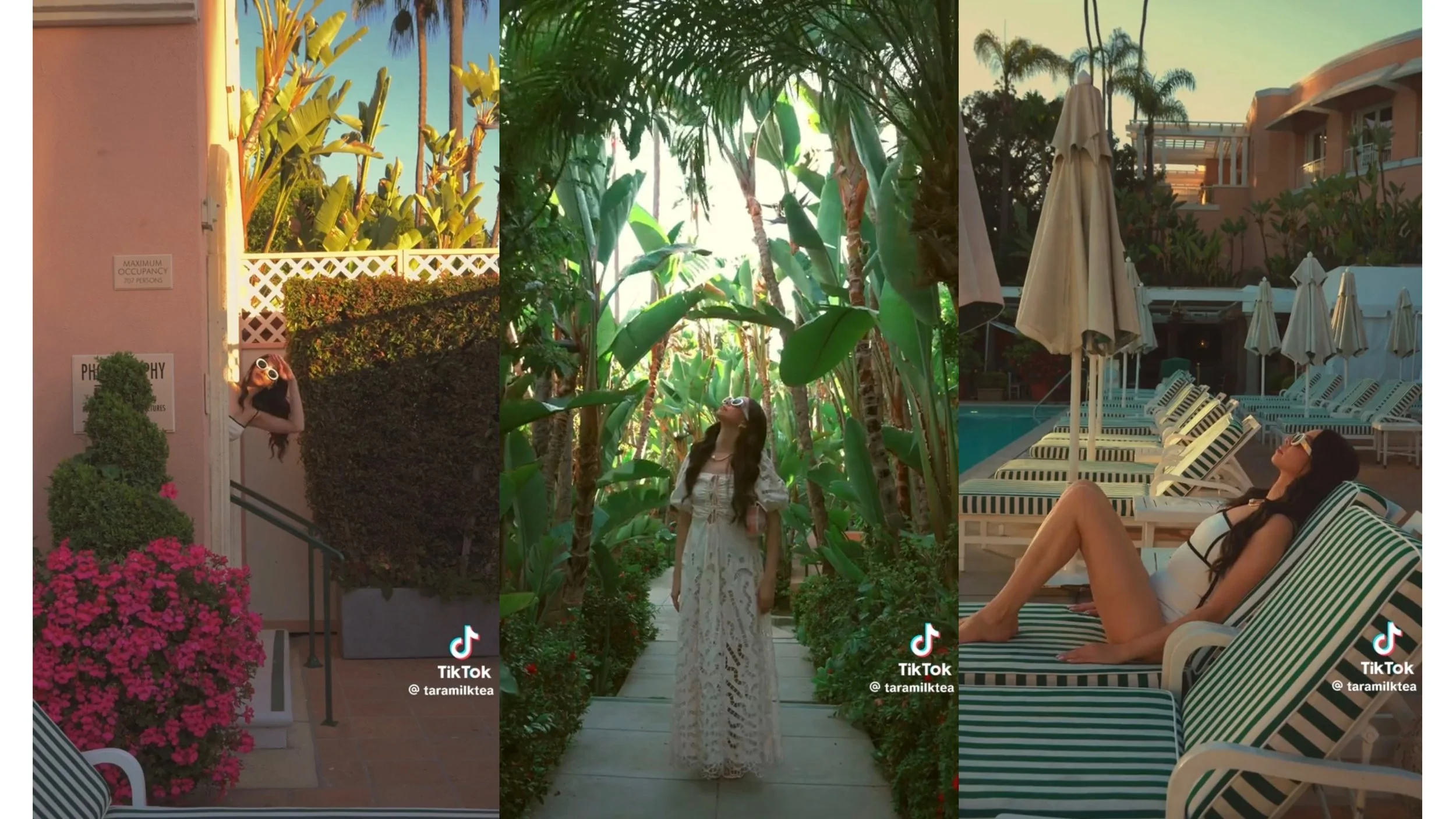
Photo credit to @taramilktea (TikTok) for The Beverly Hills Hotel.
As an avid binge scroller, I have noticed a common difference between certain videos. Some videos feel like quick clips filmed without much thought, while others immediately stand out. The lighting looks better, the colors feel more put together, the framing looks and feels intentional.
That difference is what people usually mean when they say content looks “cinematic.” It’s that feeling you get “when the lights begin to dim. And we go somewhere we’ve never been before; not just entertained, but somehow reborn. Together.” Thank you, Nicole Kidman.
This style has become more common on platforms like TikTok, Instagram and YouTube. The Wes Anderson Trend is an excellent example of how creativity and quality can elevate videos. These videos receive a high number of impressions because people are more likely to stop and watch something that is visually appealing and aesthetic. For brands, cinematic content can make posts feel less like ads and more like something you would actually want to watch.
The good part is that creating this kind of content does not require expensive equipment or a full production team. Most of the time, it comes down to how you approach filming and editing. By focusing on storytelling, lighting, composition, movement and editing, you can make even simple content feel more intentional.
Here are five ways to make social media content look more cinematic.
1. Start with a clear story
The biggest difference between regular content and cinematic content is that one actually has a purpose.
Most films follow a clear three act structure with a beginning, middle and end. Social media content can do the same thing, even if it is only a few seconds long. Before filming, it helps to think about what you want the viewer to take away.
Are you showing a transformation? Highlighting a product? Trying to capture a certain mood?
Even something simple can feel more put together if there is a clear flow. Filmmakers will often use a storyboard and a shot list. These tools are helpful in order to organize ideas, shot types and angles that the creator would like to cover. For example, travel content often starts with a wide shot of a location and then moves into smaller details like food, architecture or people. That progression makes the video feel more complete.
Brands can apply this idea as well. Instead of showing a product by itself, it usually works better to place it in a moment. Showing someone getting ready, going out or using a product in real life makes the content feel more natural and easier to connect with.
2. Use lighting intentionally
Lighting is one of the easiest ways to improve how professional a video looks.
In film, lighting is used to create mood and guide attention. On social media, the same idea applies, even if the setup is much simpler. Natural light is often the best place to start. Filming near a window or outside during golden hour can make a big difference without requiring extra equipment.
Golden hour, which happens shortly after sunrise or before sunset, creates softer and warmer tones that many people associate with cinematic visuals.
At the same time, it is important to avoid harsh or inconsistent lighting. Overhead lights or mixed light sources can create uneven colors and make footage look less cohesive. Small changes, such as turning off certain lights or adjusting your position, can noticeably improve the final result.
3. Pay attention to composition
Composition is about how everything is arranged within the frame.
In film, shots are carefully planned so the viewer’s attention goes exactly where it is supposed to. On social media, paying attention to composition can have the same effect.
One of the most common techniques is the rule of thirds.
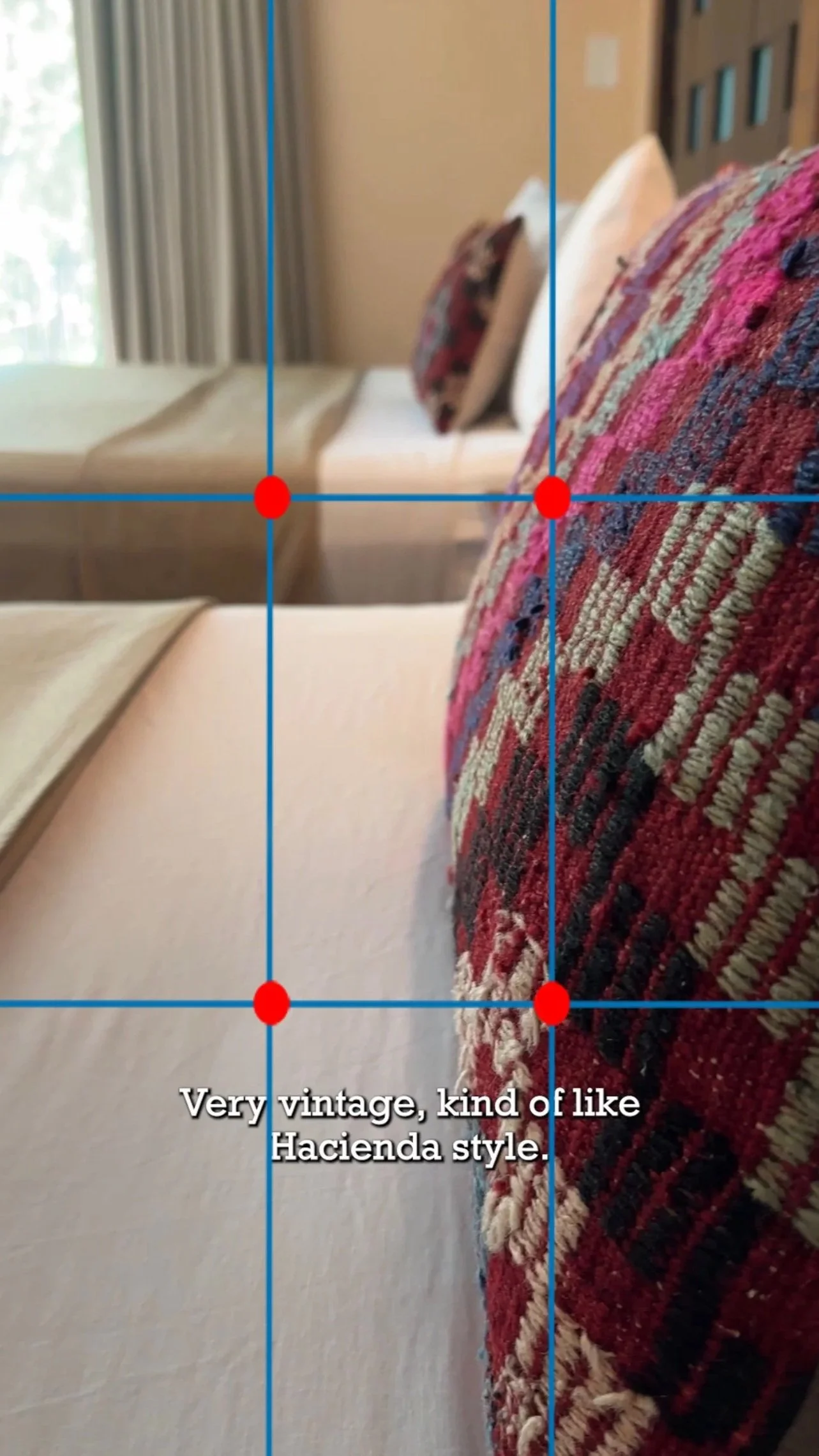
This is an example from a video I made for a boutique hotel.
Instead of placing the pillow directly in the center, I positioned it slightly off center along imaginary grid lines. This often makes the shot feel more balanced and visually interesting.
Adding depth is another simple way to improve composition. Filming through objects like windows, doorways or plants can make the scene feel more layered instead of flat.
It also helps to vary your shots. Using a mix of wide shots to establish a setting and close-ups to show details can make even short videos feel more interesting. When everything is framed the same way, the content tends to feel repetitive.
4. Keep movements smooth and purposeful
Camera movement can change how a video feels almost immediately.
Shaky footage usually comes across as casual, while smooth movement looks more polished. One of the easiest ways to improve this is by slowing down. Holding your phone with both hands and moving carefully can reduce a lot of unnecessary shaking.
Even without extra equipment, small adjustments can help. Keeping your movements steady and controlled makes the footage feel more intentional.
However, equipment does not need to be expensive. These are some of my affordable favorites.
Common cinematic movements include slow pans across a space, tracking shots that follow someone walking and subtle push-ins that move closer to a subject. These movements help the video feel put together without taking away from what’s happening.
The goal is not to add movement just for the sake of it. It should always support what you are trying to show.
5. Use editing to create a consistent look
Editing is where everything comes together.
Color plays a big role in how cinematic a video feels. Adjusting things like contrast, warmth and saturation can help create a consistent style across your content. Many creators develop a specific look that people start to recognize.
For example, travel content often uses warmer tones to create a relaxed feeling, while fashion content might lean toward cooler tones for a more polished look.
Pacing also plays an important role. If you cut clips too fast, everything starts to feel rushed, so letting shots sit a little longer usually works better. Music also makes a difference, especially when it matches the mood of the video.
Editing apps like CapCut, Adobe Premiere Pro, Final Cut Pro and even iMovie make it easier to adjust color and timing without needing advanced experience. Even small changes during editing can significantly improve how professional the final video looks.
Conclusion
Making social media content look cinematic is less about having expensive equipment and more about being intentional with your content making strategy.
By focusing on storytelling, lighting, composition, camera movement and editing, creators can turn simple footage into something that feels more engaging and visually put together.
For brands and content creators, this approach can help content stand out in crowded feeds. When something is more visually appealing to look at, people are more likely to stop, watch and actually pay attention.
At the end of the day, cinematic content is not just about looking good. It is about creating something that feels complete and worth watching.
